
Speakers

Keynote Speaker
Huazhong University of Science and Technology Prof. Xiaofeng Ding is currently a Professor and Pd.D Supervisor in the School of Computer Science and Technology at Huazhong University of Science and Technology (HUST). He received his Ph.D degree in Computer Science from HUST in 2009. He also worked as Research Fellow at the National University of Singapore and the University of South Australia during 2010-2013. His research interests mainly include data privacy and query processing, data encryption, graph databases and deep learning. Most of my works are published in reputable jounrals or conferences like IEEE Transactions on Knowledge and Data Engineering, IEEE Transactions on Dependable and Secure Computing, International Conference on Very Large Data Bases (VLDB), IEEE International Conference on Data Engineering (ICDE), ACM Conference on Information and Knowledge Management (CIKM) and etc. Speech Title: Privacy Preserving Problems in Big Data System Abstract: The need to efficiently store and query large scale datasets is evident in the growing number of data-intensive applications, particularly to maximize the mining of intelligence from these data (e.g., to inform decision making). However, directly releasing dataset for analysis may leak sensitive information of an individual even if the data is anonymized, as demonstrated by the re-identification attacks on the DBpedia datasets. In this talk, we introduce a novel k-decomposition algorithm and define a new information loss matrix designed for utility measurement in massively large graph datasets. We also propose a novel privacy preserving framework that can be seamlessly integrated with graph storage, anonymization, query processing, and analysis. |
|

University of Guelph Prof. Simon X. Yang received the B.Sc. degree in engineering physics from Beijing University, China in 1987, the first of two M.Sc. degrees in biophysics from Chinese Academy of Sciences, Beijing, China in 1990, the second M.Sc. degree in electrical engineering from the University of Houston, USA in 1996, and the Ph.D. degree in electrical and computer engineering from the University of Alberta, Edmonton, Canada in 1999. Prof. Yang joined the School of Engineering at the University of Guelph, Canada in 1999. Currently he is a Professor and the Head of the Advanced Robotics & Intelligent Systems (ARIS) Laboratory at the University of Guelph in Canada. Prof. Yang has diversified research expertise. His research interests include intelligent systems, robotics, control systems, sensors and multi-sensor fusion, wireless sensor networks, intelligent communications, intelligent transportation, machine learning, and computational neuroscience. Prof. Yang he has been very active in professional activities. Prof. Yang serves as the Editor-in-Chief of International Journal of Robotics and Automation, and Intelligence & Robotics; and an Associate Editor of IEEE Transactions on Cybernetics, IEEE Transactions on Artificial Intelligence, and several other journals. He has involved in the organization of many international conferences. Speech Title: Bio-inspired Intelligence of Real-time Navigation and Cooperation of Multiple Robotic Systems Abstract: Research on biologically inspired intelligence has made significant progress in both understanding the biological systems and developing bionic engineering applications to various autonomous robotics systems. In this talk, I will start with a very brief introduction to biologically inspired computational neural dynamics algorithms and their applications to biological and bioinspired systems. After that, I will focus on our recent research on bioinspired intelligent real-time navigation and cooperation of various multiple autonomous robotic systems, such as real-time path planning, tracking, and control of autonomous mobile, aerial, water surface and underwater robotic systems; and intelligent navigation and cooperation of multi-robot systems. |
|
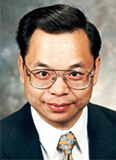
Nanchang Hangkong University LU LENG received his Ph.D degree from Southwest Jiaotong University, Chengdu, P. R. China, in 2012. He performed his postdoctoral research at Yonsei University, Seoul, South Korea, and Nanjing University of Aeronautics and Astronautics, Nanjing, P. R. China. He was a visiting scholar at West Virginia University, USA, and Yonsei University, South Korea. Currently, he is a full professor at Nanchang Hangkong University. Prof. Leng has published more than 100 international journal and conference papers, including more than 50 SCI papers and three highly cited papers. He has been granted several scholarships and funding projects, including five projects supported by National Natural Science Foundation of China (NSFC). He serves as a reviewer of more than 100 international journals and conferences. His research interests include computer vision, biometric template protection and biometric recognition. Prof. Leng is an outstanding representative of "Innovation Talent" of Jiangxi Enterprise in "Science and Technology China" in 2021, received "Jiangxi Youth May Fourth Medal" in 2019, "Jiangxi Hundred-Thousand-Ten-thousand Talent Project" in 2018, "Jiangxi Voyage Project" in 2014, etc. Speech Title: Biometric Template Protection Abstract: Biometric recognition is convenient and reliable, so it has been widely used for identification and verification. However, the biometric systems typically suffer from many serious security and privacy problems. Biometric features are immutable, so they cannot be updated. In other words, a user cannot revoke and reissue his/her biometric template even if the template is compromised. In addition, a user’s biometric templates with the same features are likely to be stored and shared in various databases. If the user’s biometric template in one database is attacked successfully, his/her biometric templates in the other databases are not secure anymore. Last but not least, the biometric templates without protection likely leak users’ private information, such as gene defects, diseases. Thus biometric template must be used with protection. Biometric template should meet four criteria, namely diversity, revocability / reusability, non-invertibility, accuracy performance. Unfortunately, it is highly challenging to meet all the criteria simultaneously. This keynote speech will introduce the advanced technologies of biometric template protection. |
|

Sun Yat-sen University, China Congduan Li (Member, IEEE) received the B.S. degree from the University of Science and Technology Beijing, China, in 2008, the M.S. degree from Northern Arizona University, AZ, USA, in 2011, and the Ph.D. degree from Drexel University, PA, USA, in 2015, respectively, all in Electrical Engineering. From October 2015 to August 2018, he was a Post-Doctoral Research Fellow with the Institute of Network Coding, The Chinese University of Hong Kong and with the Department of Computer Science, City University of Hong Kong. He is currently an Associate Professor with the School of Electronics and Communication Engineering, Sun Yat-sen University, China. Speech Title: Intelligent Path Plannings in Internet of Vehicles Based on Federated Reinforcement Learning Abstract: With the continuous advancement of urban modernization, regional traffic congestion has become increasingly frequent, seriously affecting the safety and efficiency of urban vehicles, and has become one of the key issues that need to be solved urgently. In the context of the 5G new infrastructure interconnection of all things and the vigorous development of artificial intelligence technology, many new roads that use multi-source collaborative technologies such as the Internet of Vehicles to solve urban congestion problems have been proposed, such as the traffic flow prediction methods and road network planning methods based on artificial intelligence, which have been widely used in traffic management. However, in the face of increasingly complicate traffic networks, existing methods need to collect a large amount of raw data for calculation, and the time and space complexity makes it difficult to meet the real-time requirements, and there is also a risk of privacy data leakage. Therefore, this talk aims at the difficulties in the basic research of the Internet of Vehicles and autonomous driving, and proposes a vehicle path planning strategy based on technologies such as deep learning, reinforcement learning, and federated learning. Specifically, we propose a regional traffic flow prediction model based on federated reinforcement learning, and use this to generate a road weight prediction method combined with real traffic information, which is used to optimize vehicle driving paths, reduce average travel time, and improve system performance. Based on this model, this talk further designs and implements a vehicle-road collaborative path planning scheme based on federated deep reinforcement learning. This scheme can not only filter and extract undetectable features from real-time complex road networks, but also take into account the complicate environments. Under the premise of protecting the privacy of local data, vehicles can make full use of multi-vehicle information to jointly train and optimize the algorithm model. The experimental results show that the proposed schemes can deal with the changing and complex traffic environment more effectively, improve the privacy protection ability of model update, optimize the prediction effect of the road weight model, and provide a reference for building a safe and efficient regional traffic system. These will provide practical solutions for urban traffic congestion problems. |
|
